Education

Materials for Observing Nature
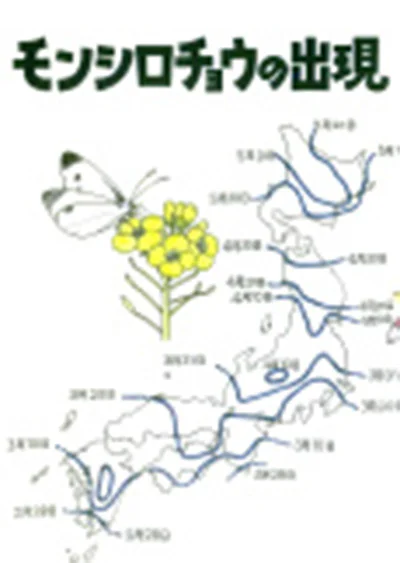
①Appearance of Cabbage Butterflies and the Blooming of Cherry
Recording the blooming of plants, first sightings of animals, and the first sounds they make is called biological observation record.
These records serve as important data to understand the pace of seasonal changes and long-term climate trends.
Appearance of Cabbage Butterflies and the Blooming of Cherry(PDF)(リンクを新しいタブで開きます)(182.4 KB)
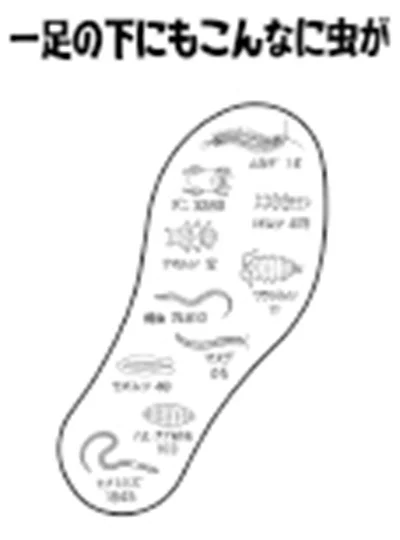
②So Many Insects Beneath Just One Foot
Beneath the fallen leaves on the forest floor, a great number of soil-dwelling animals live. How many of them do you think exist under just one shoe?
So Many Insects Beneath Just One Foot(PDF)(リンクを新しいタブで開きます)(147.5 KB)
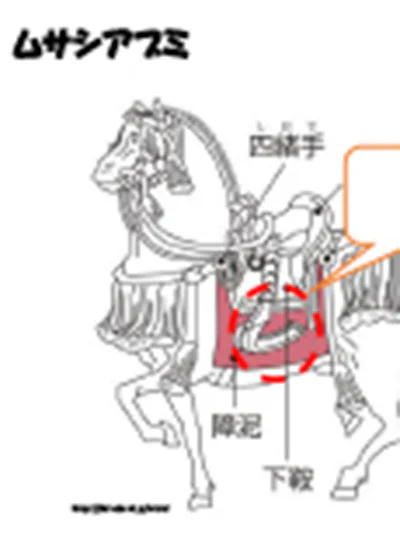
③Musashiabumi
Musashiabumi is a member of the Araceae (arum) family that blooms around April. Its spathe—a leaf-like part that encloses the flower—resembles a traditional stirrup (abumi) made in the historical Musashi Province (now covering parts of Tokyo, Saitama, and Kanagawa), which is how it got its name.
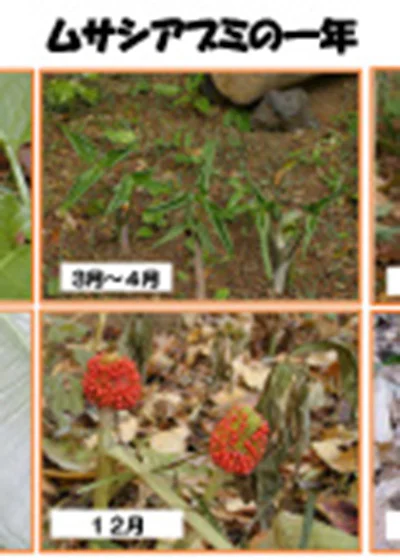
④A Year in the Life of Musashiabumi
Musashiabumi has very distinctive buds, flowers, and fruits. The plant has male and female individuals, and only the female plants bear fruit. Interestingly, sex changes between male and female have also been observed in this species.
A Year in the Life of Musashiabumi(PDF)(リンクを新しいタブで開きます)(663.4 KB)
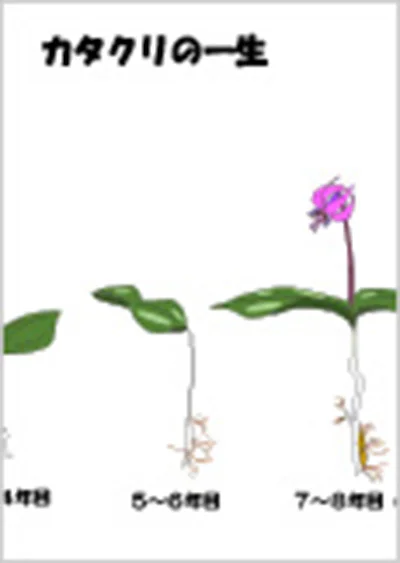
⑤The Life Cycle of the Dogtooth Violet
It takes a long time for dogtooth violets (Katakuri) to mature. After a seed enters the soil, it takes about 7 to 8 years before the plant finally blooms.
The Life Cycle of the Dogtooth Violet(PDF)(リンクを新しいタブで開きます)(126.9 KB)
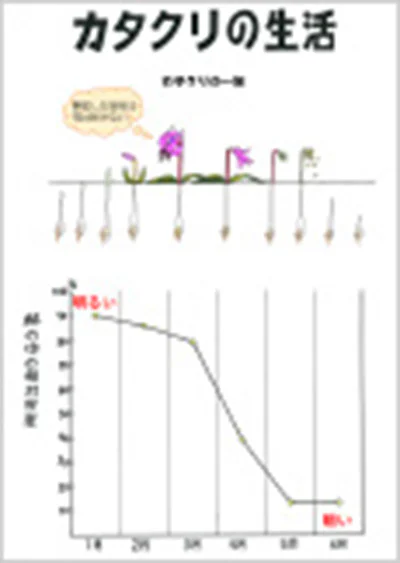
⑥The Life of the Dogtooth Violet
Dogtooth violets bloom and bear fruit in early spring, and then go dormant from summer onward. They are well adapted to the light conditions of forest interiors in early spring. Such plants, which bloom quickly in spring and then have their leaves and stems die back, are called spring ephemerals.
The Life of the Dogtooth Violet(PDF)(リンクを新しいタブで開きます)(309.8 KB)
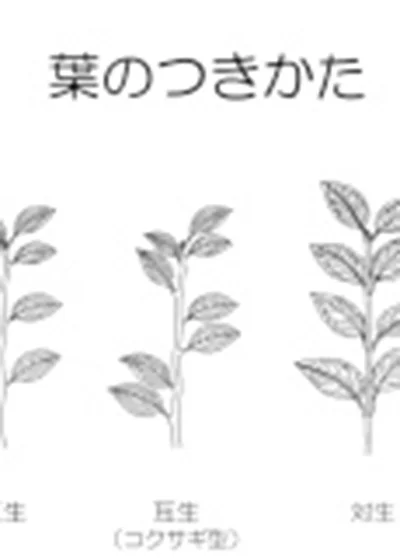
⑦Leaf Arrangement: Phyllotaxy
The pattern in which leaves are arranged on a stem is called phyllotaxy. Based on the number and arrangement of leaves at each node, there are several types:
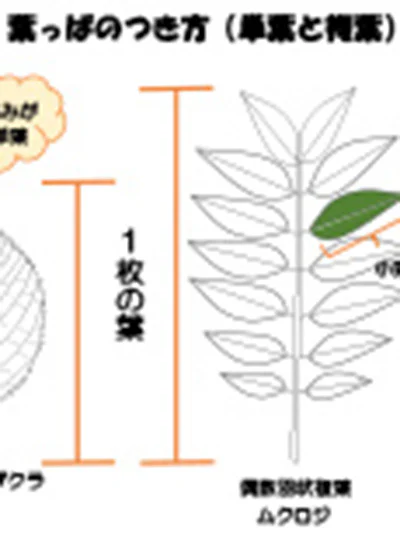
⑧Simple and Compound Leaves
Leaves that are whole and undivided are called simple leaves. In contrast, if a leaf is divided into two or more distinct parts, it is called a compound leaf.
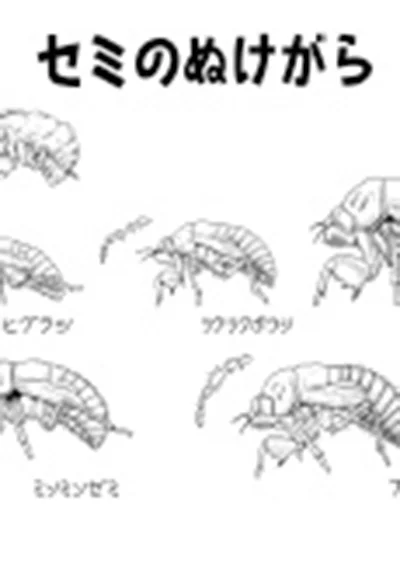
①Cicada Shells
Let’s observe cicada shells. You can identify the species by examining the overall shape and size, as well as the length and thickness of the segments on their antennae.
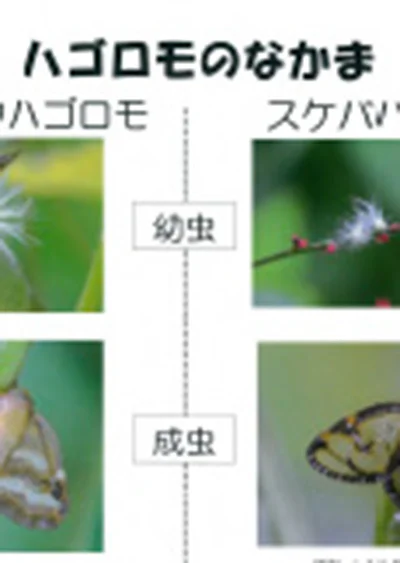
②planthoppers
ハゴロモ類は、分類学的にはセミに近いなかまです。
Planthoppers are insects taxonomically related to cicadas.
Ricania japonica and Euricania facialis are types of planthoppers commonly seen at the Institute for Nature Study. Their nymphs (young insects) have fluffy white decorations on their bodies.
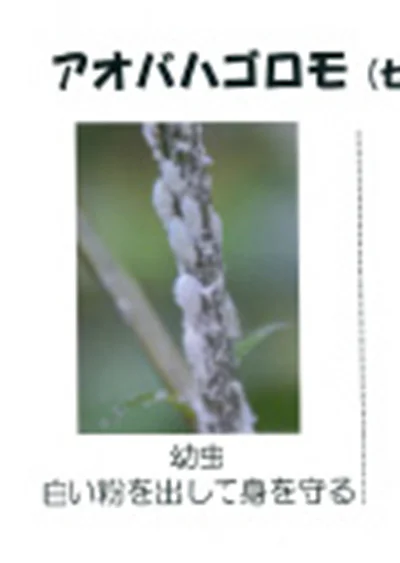
③Green Planthopper (Aobahagoromo)
The green planthopper is a small bug, about 1 cm long. Many of them like to sit together on grass or tree branches. They look like flower buds to hide from enemies. The babies make white powder to protect themselves.
Green Planthopper (Aobahagoromo)(PDF)(リンクを新しいタブで開きます)(130.2 KB)
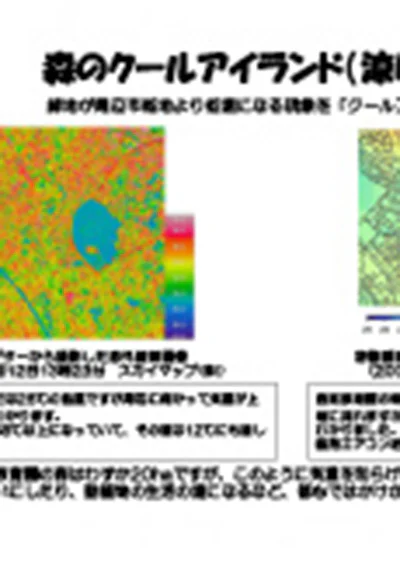
④A Forest That Functions as a "Cool Island"
When green areas become cooler than the surrounding urban environment, this is called a "Cool Island" phenomenon. The forest of the Institute for Nature Study functions as a cool island, helping to moderate the rise in temperature in nearby city areas.
A Forest That Functions as a "Cool Island"(PDF)(リンクを新しいタブで開きます)(445.8 KB)
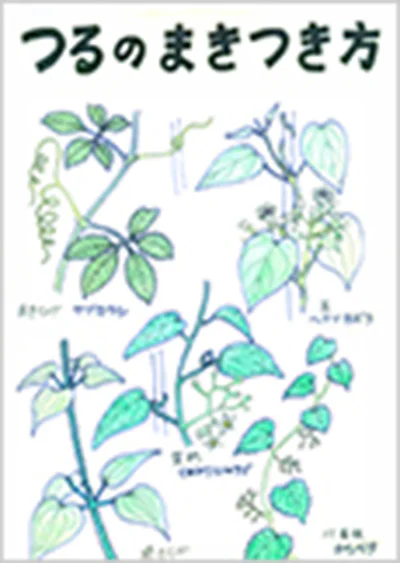
⑤How vines climb
Vines climb in many ways. Let’s observe the different types.
Ways they climb:
- Twining with tendrils
- Twining with stems
- Twining with petioles
- Using stiff hairs or thorns on the stem
- Using adhesive roots
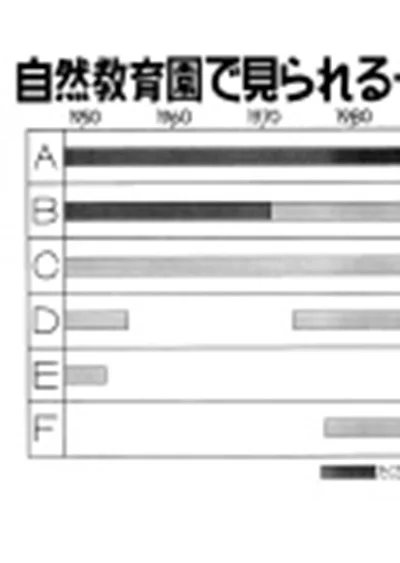
⑥Shifts in Butterfly Species Seen at the Institute for Nature Study Over the Years
Butterflies recorded at the Institute for Nature Study can be categorized into six groups based on their population trends and frequency of occurrence:
Type A: Seen every year since the park openedType B: Seen a lot before 1970, but fewer now
Type C: Seen every year, but only a few
Type D: Seen when the park opened, disappeared, then came back recently
Type E: Disappeared soon after the park opened
Type F: Started to be seen only recently
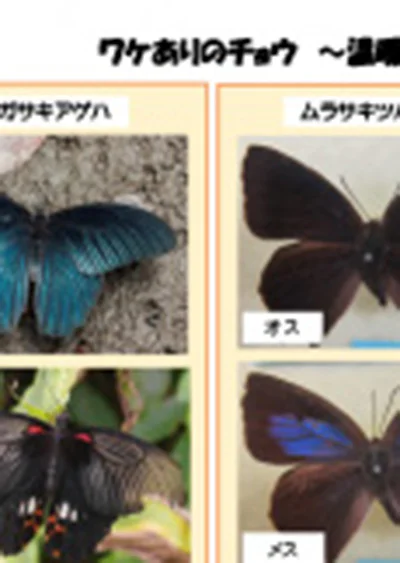
⑦Butterflies with a Backstory: Species Increasing Due to Global Warming
In recent years, butterflies have been expanding their range northward as a result of global warming. As a result, species that had never been seen in the Institute for Nature Study are now being observed. These are classified as Type F in "⑥ Shifts in Butterfly Species Seen"
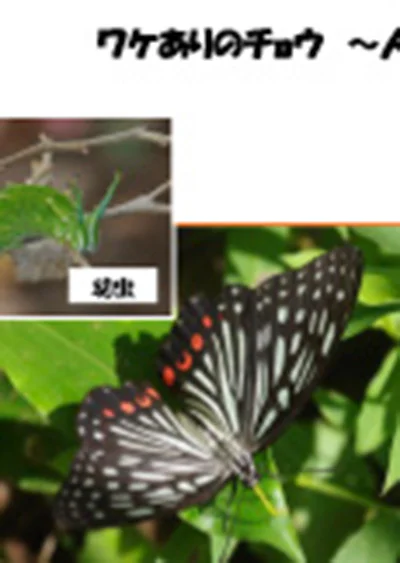
⑧Butterflies with a Backstory: Introduced Species — Red Ring Skirt
The Red Ring Skirt originated in mainland China and was introduced to Japan by humans. It has now established itself mainly in southern Kanto and is designated as a "Specified Invasive Alien Species" under Japan’s Invasive Alien Species Act.
Butterflies with a Backstory: Introduced Species — Red Ring Skirt(PDF)(リンクを新しいタブで開きます)(314.7 KB)
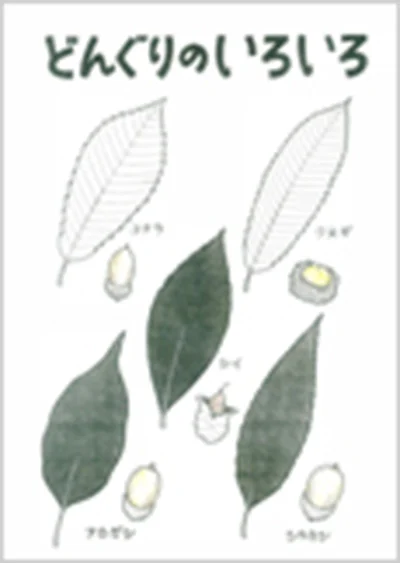
①Different Types of Acorns
There are several types of trees that produce acorns. You can tell the difference by looking at the shape and pattern of the acorn cups. In the illustrations, leaves with lighter colors represent deciduous trees, and those with darker colors represent evergreen trees.
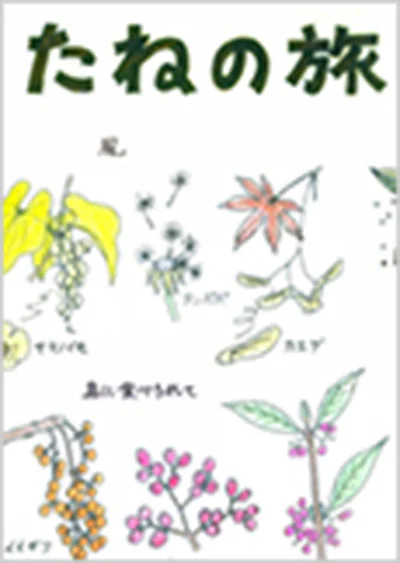
②The Journey of Seeds
Plants cannot move by themselves, so they use various methods to spread their seeds and travel to new places to continue their species.
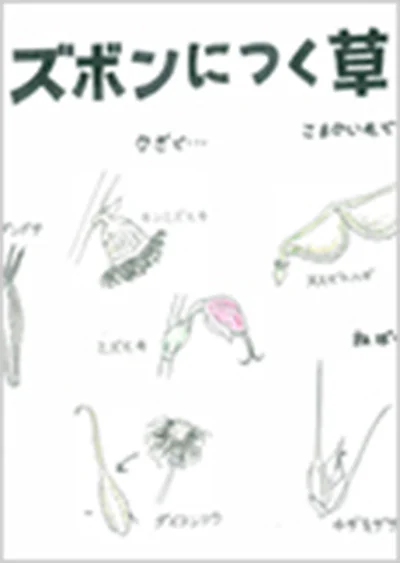
③grass seeds Sticking to Shirts and Pants
When you walk through grassy areas in autumn, many seeds stick to your clothes. This is a clever trick plants use to have animals carry their seeds.
grass seeds Sticking to Shirts and Pants(PDF)(リンクを新しいタブで開きます)(601.6 KB)
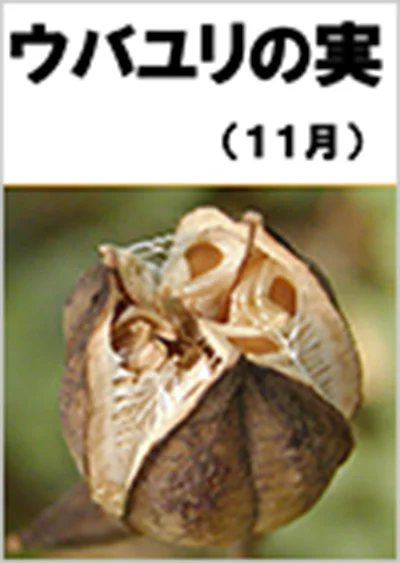
④Seeds of the Cardiocrinum japonicum
Inside the fruit of Cardiocrinum japonicum are many thin, membrane-like seeds. When the wind blows, the seeds scatter like confetti. The fibers left on the split fruit help prevent the seeds from falling all at once. The shape of the seeds and the way the fruit splits is a perfect mechanism for spreading seeds by wind.
Seeds of the Cardiocrinum japonicum(PDF)(リンクを新しいタブで開きます)(62.9 KB)
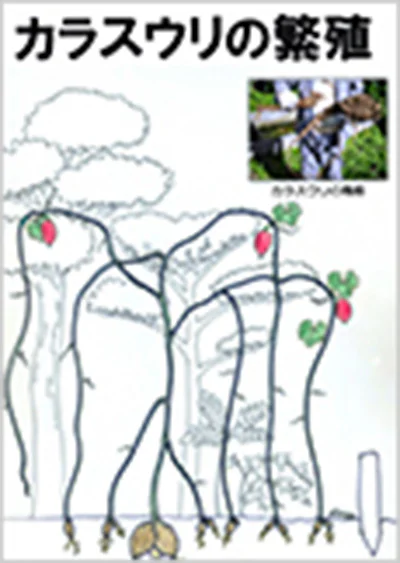
⑤Reproduction of Trichosanthes cucumerina
In autumn, the long vines of the Trichosanthes cucumerina plant grow underground and form tubers. The following spring, new vines sprout from these tubers.
Reproduction of Trichosanthes cucumerina(PDF)(リンクを新しいタブで開きます)(1.2 MB)
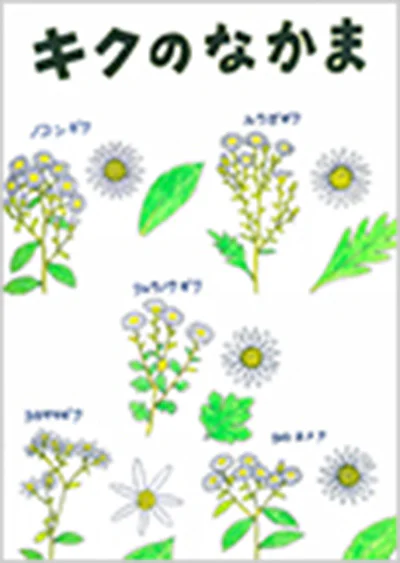
⑥Chrysanthemum Family
These are types of wild chrysanthemums commonly found along roadsides and familiar places.
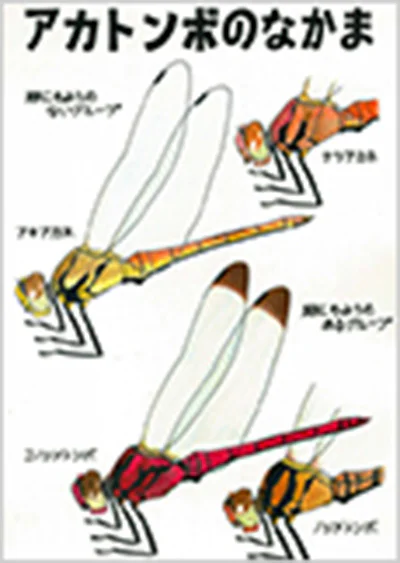
⑦Dragonfly Family
Among the red dragonflies seen at the Institute for Nature Study, here are some similar species and tips on how to tell them apart.
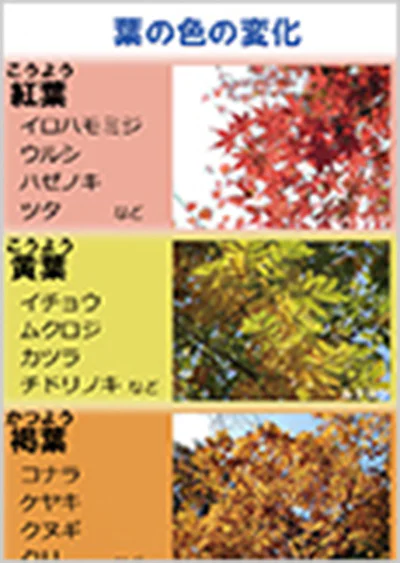
⑧Changes in Leaf Color
The way leaves change color in autumn varies depending on the type of tree.
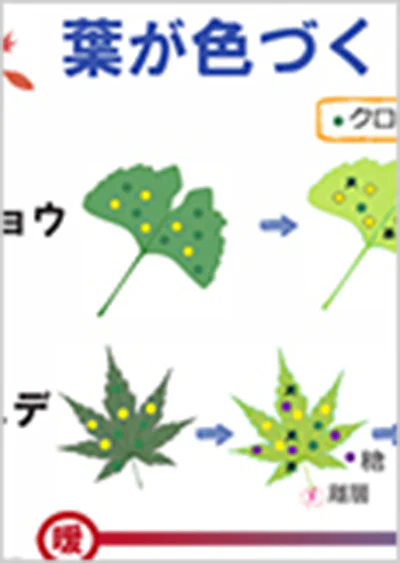
⑨The mechanism behind autumn foliage
The leaves turning red is called “autumn foliage,” while turning yellow is called “yellowing leaves.” The mechanisms behind these phenomena differ.
The mechanism behind autumn foliage(PDF)(リンクを新しいタブで開きます)(568.3 KB)
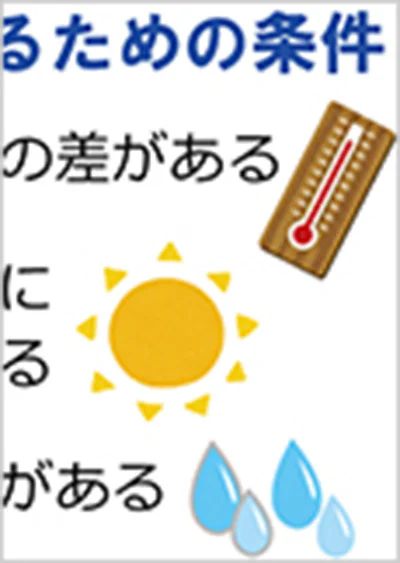
⑩Conditions for beautiful autumn foliage
Temperature and sunlight affect the color change in leaves. When the right conditions come together, beautiful autumn colors appear.
Conditions for beautiful autumn foliage(PDF)(リンクを新しいタブで開きます)(216.6 KB)
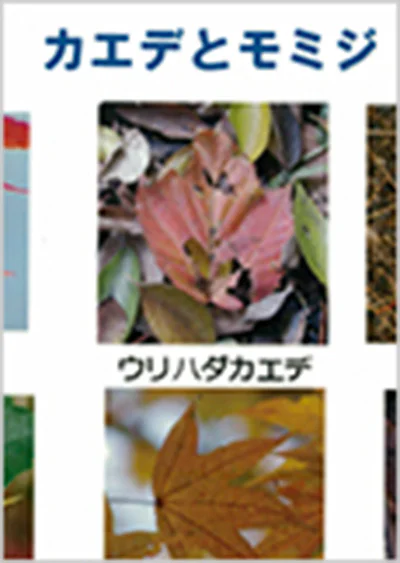
⑪Maples and Momiji
“Maple” and “Momiji” are well-known trees for autumn colors. Although their names are different, both belong to the same family and genus (Sapindaceae family, Acer genus).
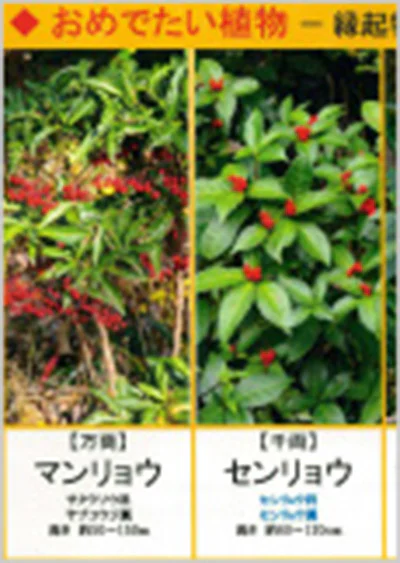
①Auspicious Plants – Good Luck Symbols
Plants such as Ardisia crenata and
Sarcandra bear bright red berries from autumn to winter. Because of this, they have long been cherished as lucky decorations for the New Year.
Auspicious Plants – Good Luck Symbols(PDF)(リンクを新しいタブで開きます)(359.8 KB)
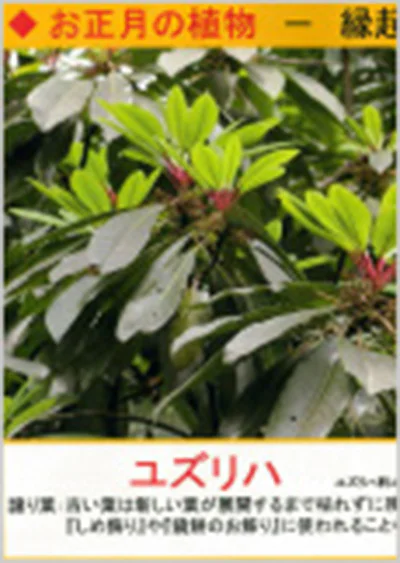
②New Year’s Plants – Good Luck Symbols
Daphniphyllum is considered a lucky plant and is used in New Year’s decorations.
New Year’s Plants – Good Luck Symbols(PDF)(リンクを新しいタブで開きます)(315.0 KB)
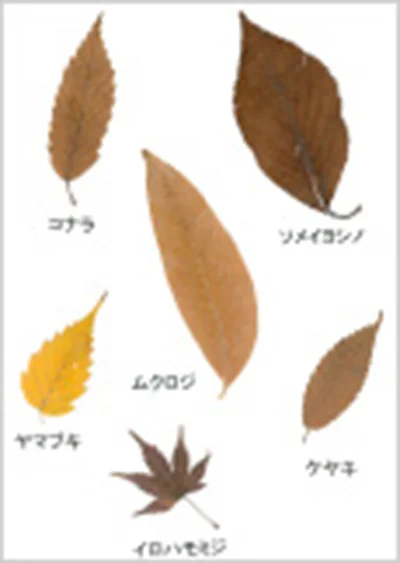
③Fallen Leaves Seen at the Institute for Nature Study
From autumn to winter, many leaves fall to the ground. Fallen leaves are excellent materials for close observation since they can be examined right in front of you.
Fallen Leaves Seen at the Institute for Nature Study(PDF)(リンクを新しいタブで開きます)(601.0 KB)
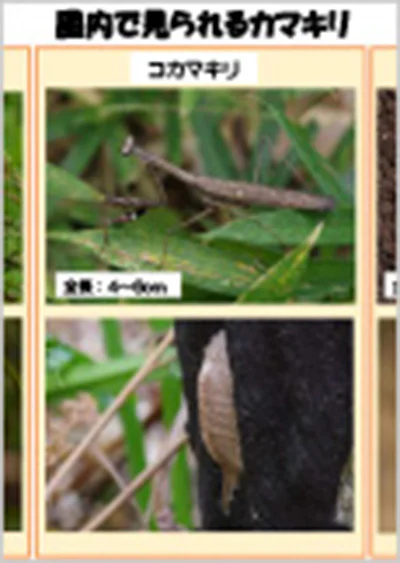
④Mantises Seen at the Institute for Nature Study
Mantises survive the winter in egg cases called oothecae. The shape and location of the egg cases vary depending on the species.
Mantises Seen at the Institute for Nature Study(PDF)(リンクを新しいタブで開きます)(269.7 KB)
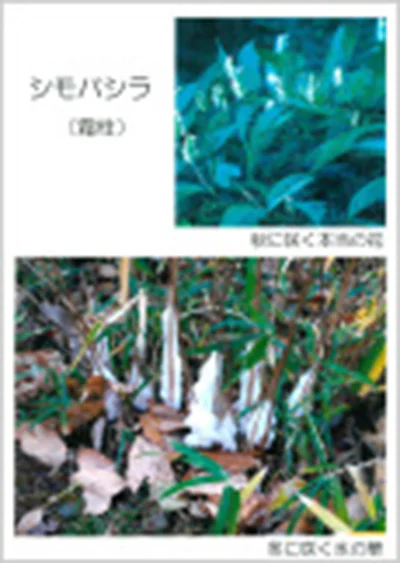
⑤Does Chinese Bloodroot Flower Twice?
Chinese Bloodroot flowers twice. The true flowers bloom in autumn, while in winter, ice formations known as “frost flowers” appear.
Does Chinese Bloodroot Flower Twice?(PDF)(リンクを新しいタブで開きます)(353.0 KB)
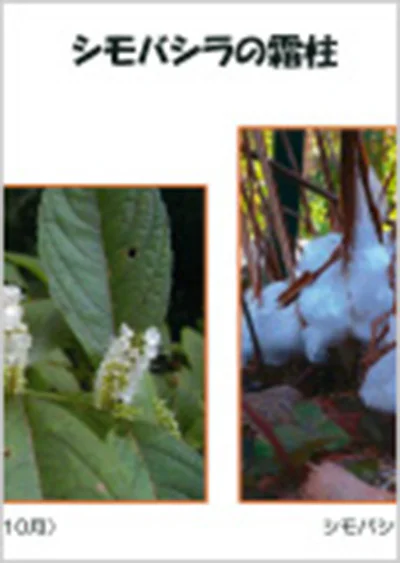
⑥Frost Pillars of Chinese Bloodroot
Chinese Bloodroot gets its name from the frost-like ice columns that form around the base of its stems on cold winter mornings. These frost pillars can usually be seen around January at the Institute for Nature Study. Let’s take a close look at the frost pillars of Chinese Bloodroot.
Frost Pillars of Chinese Bloodroot(PDF)(リンクを新しいタブで開きます)(251.3 KB)
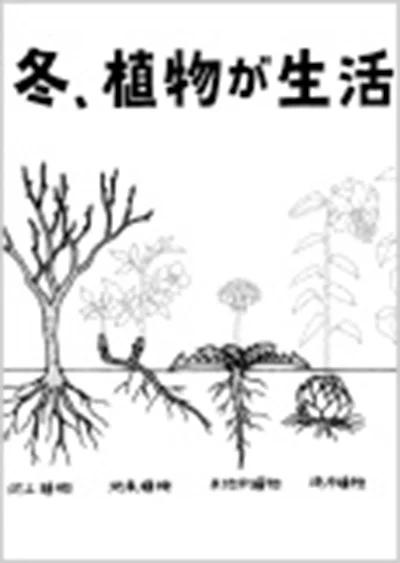
⑦How Plants Live in Winter
To protect themselves from winter dryness and freezing, plants safeguard their actively dividing cells in structures called “winter buds” (dormant buds). Plants can be categorized based on the position of these winter buds.
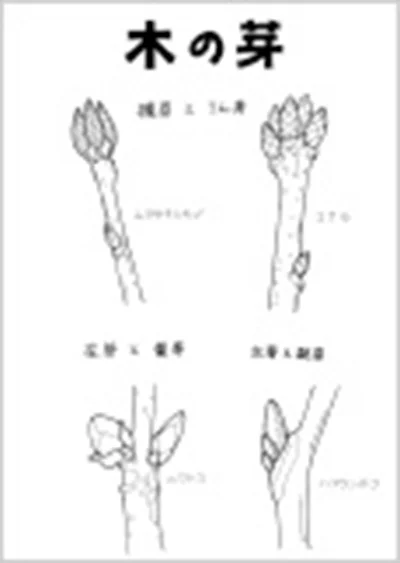
⑧Types of Tree Buds
By observing tree winter buds, we can understand how trees survive the cold and dryness by protecting their delicate buds in various ways.
Naked Buds and Scaly Buds
-
Naked Buds: Buds not protected by bud scales, often covered with fine hairs.
- Scaly Buds: Buds protected by scale-like structures called bud scales.
Flower Buds and Leaf Buds
Buds that will eventually become flowers are called flower buds. Buds that will become leaves are called leaf buds.
Terminal Buds and Lateral Buds
When there are multiple winter buds, the largest bud that opens first in early spring is called the terminal bud (or main bud).The other buds are called lateral buds (or auxiliary buds).
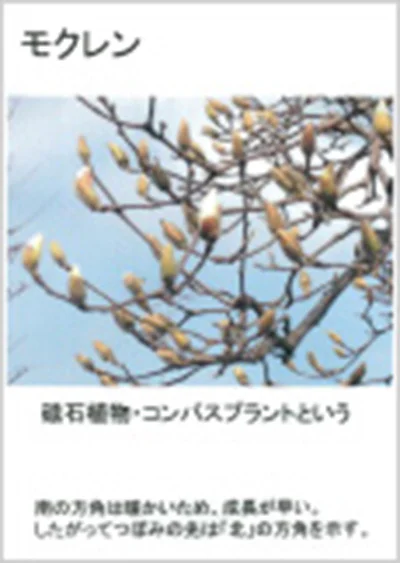
⑨Is the Magnolia a Magnet or Compass?
Magnolias are called “magnet plants” or “compass plants” because the tips of their flower buds point north.
Is the Magnolia a Magnet or Compass?(PDF)(リンクを新しいタブで開きます)(211.4 KB)
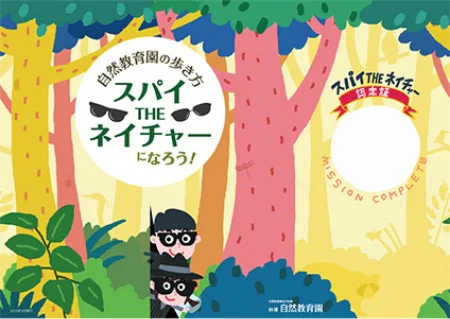
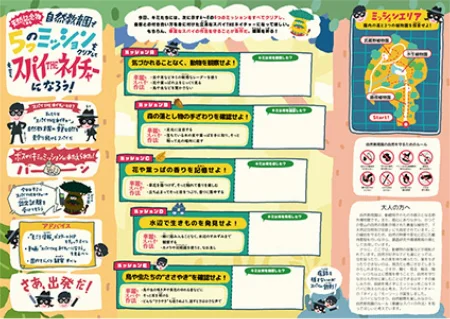
How to Explore the Institute for Nature Study – Become a Nature Spy!
This worksheet lets you enjoy observing nature while learning the rules for protecting the Institute’s natural environment.
Use it together with the related video for an even more engaging experience.
Worksheet
Video



Learning the Mechanisms of Nature at the Institute for Nature Study
This website uses the Institute for Nature Study as an example to help you learn about changes in nature caused by “invisible forces,” such as time, seasons, and interactions with humans.